

the fix files
Beyond the review. This is where we take positions, ask uncomfortable questions, and talk about desi food the way it deserves to be talked about. Pull up a chair.
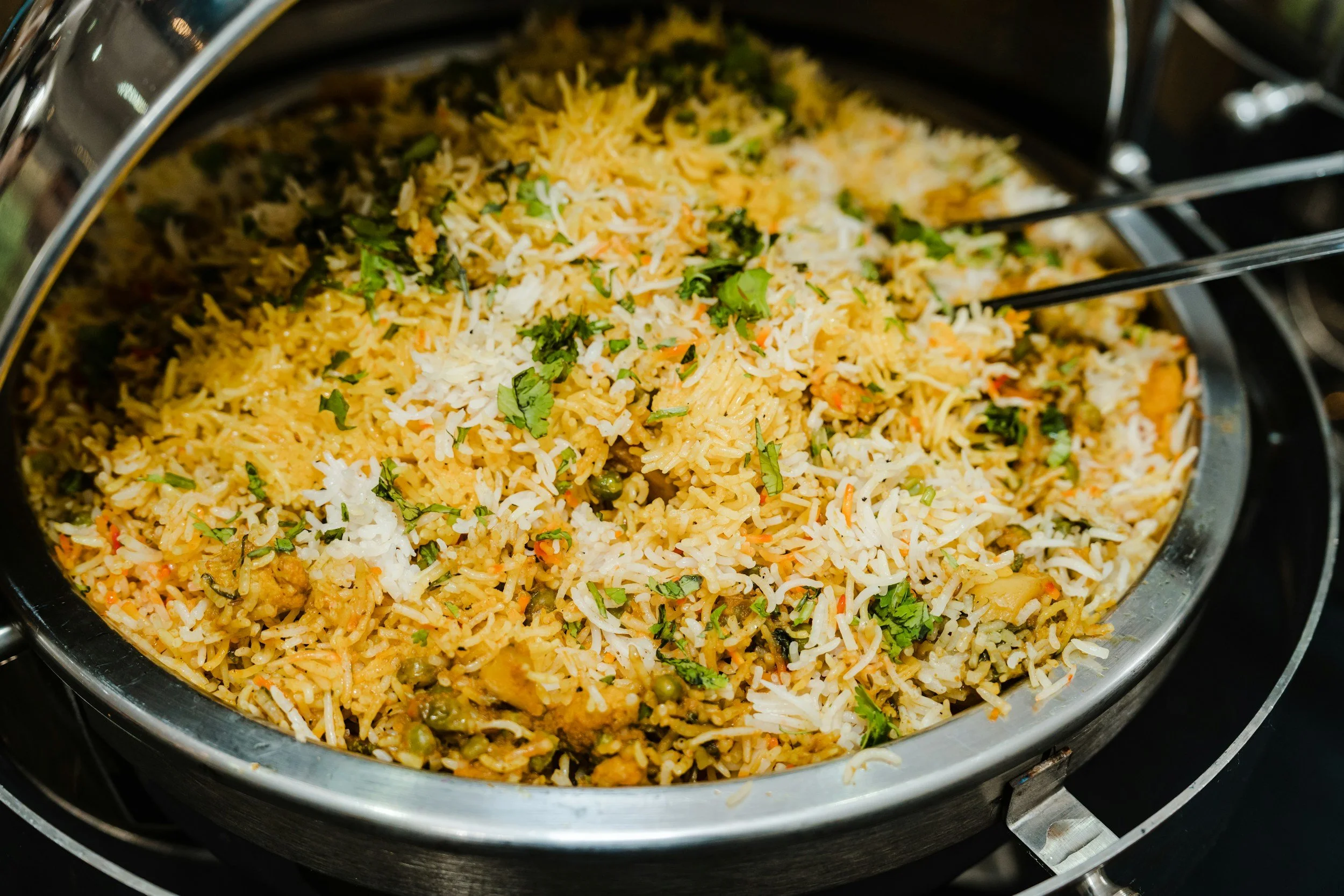
Is This the Best Chai Anywhere?
A 1927 Delhi tea stall that became a 120-store high-street habit, the dhabas of the Grand Trunk Road, the smashed bhaars of Kolkata — and why the answer was never really about the tea.
By Kazi Zaman
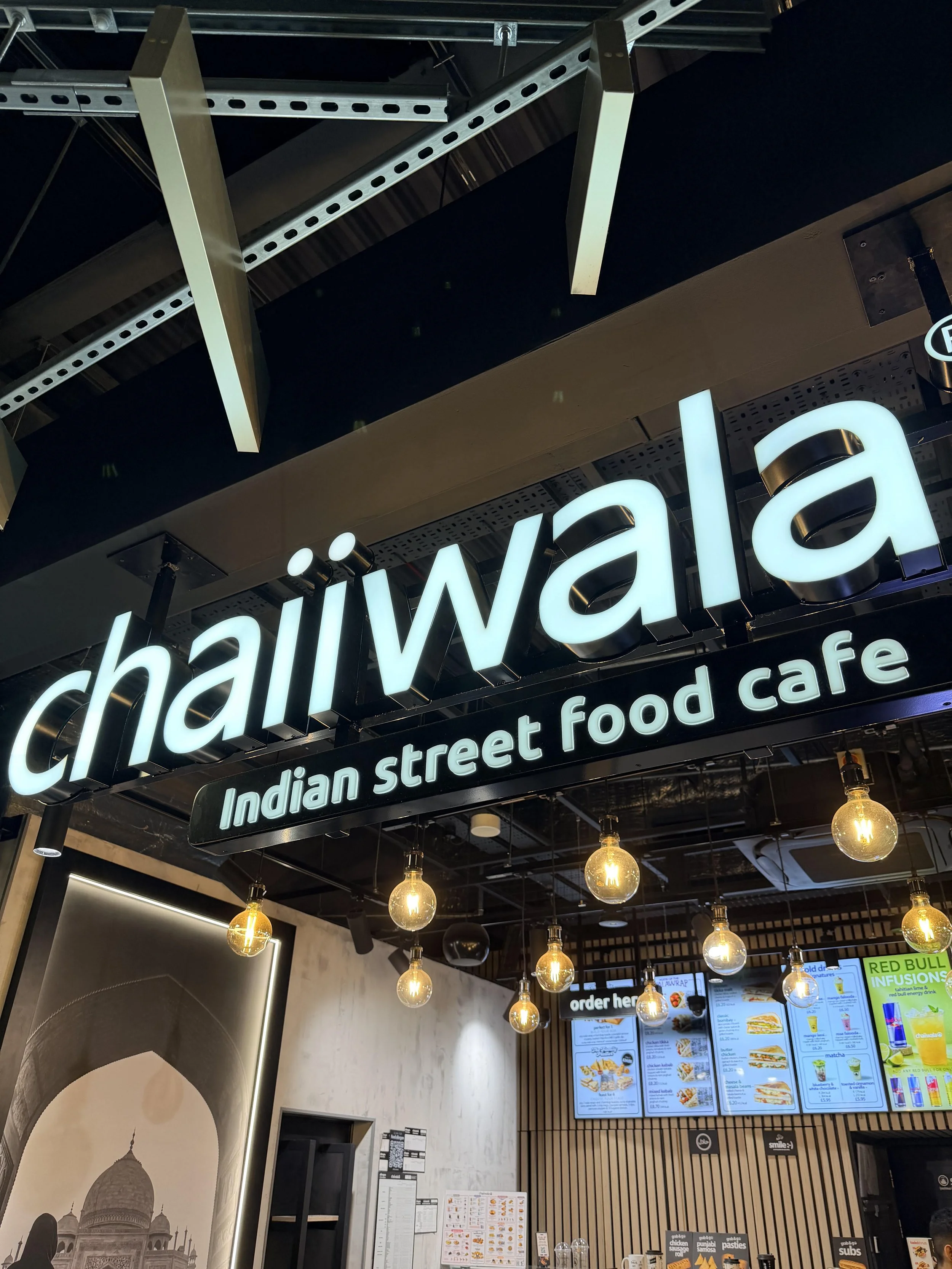
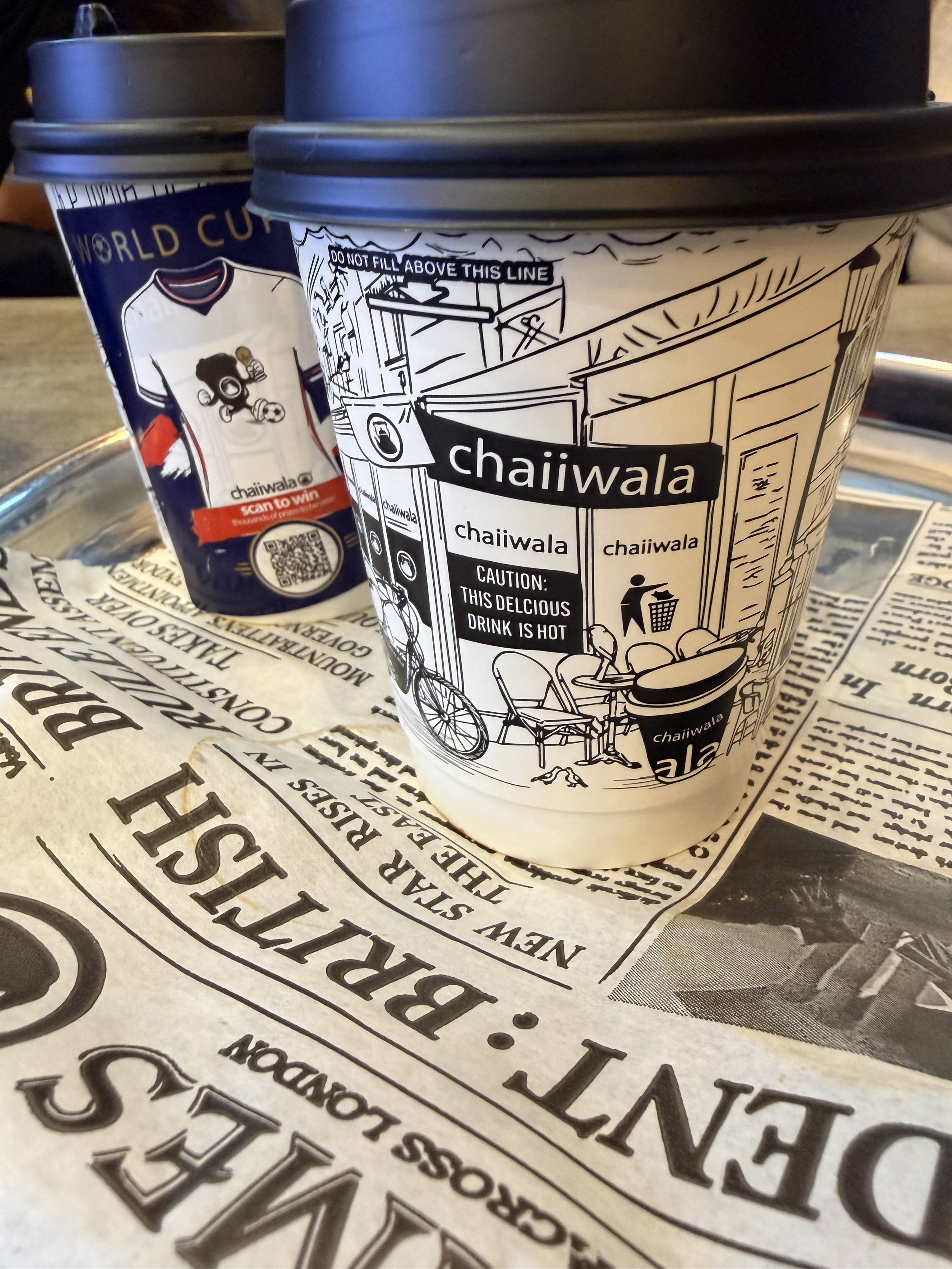
The cup arrives faster than it has any right to, which is the first thing to understand about Chaiiwala. You order a karak, and before you have finished fishing out your card it is in your hand — deep amber, milk-heavy, a low hum of ginger and cinnamon riding over a blend the company will only describe as seven spices and a secret. It is good. Reliably, almost suspiciously good, the same in Leicester as in Luton departures as in a Dubai mall. And that consistency is exactly what makes you squint at the cup and ask the question every desi has fought about at least once, usually loudly, usually with someone who is wrong: is this the best chai anywhere?
The brand wants you to believe the line runs straight back to Delhi. It does, more or less. The recipe traces to a tea stall a great-grandfather ran in the city in 1927, carried down through the family until two Leicester-born descendants — Muhummed Ibrahim, a trained pharmacist, and Sohail Ali — decided in 2015 that Britain's most multicultural city somehow had nowhere to get a proper cup of chai. Their first branch was a converted bin store on Evington Road. Their mothers cooked the early street food off family recipes. A decade later it is a 120-store operation across the UK, Canada, and the UAE, with a 24-hour drive-thru in Blackburn, an airport unit at Luton, and the stated ambition to hit 500 sites worldwide. Somewhere north of a hundred million cups of karak have been poured. This is no longer a tea stall. This is the desi answer to Costa.
And that, not the cup itself, is the genuinely interesting thing about Chaiiwala. Because the chai, honestly assessed, is a chain product. It is pre-brewed and held so it can move at high-street speed, which means it trades the ragged edge of a fresh pour for the dependability of a cup that never lets you down and never quite startles you either. It is comforting in the way a good habit is comforting. What Chaiiwala actually achieved was never a single transcendent cup — it was making a good cup ordinary, available, scaled onto a grey Tuesday between a dentist appointment and the school run. That is a different and arguably harder magic.
And Chaiiwala is not even the only chain running this exact play. A continent away, in a modest cafeteria in Dubai's Al Mamzar in 2004, a young man named Rafih FiLLi stirred a pinch of saffron into a cup of milk tea, borrowed the nickname his school friends had stuck him with, and accidentally built an empire. That cup — Zafran chai, Assam leaf turned gold with Kashmiri saffron — became the Gulf's most adored brew, then refused to stay put: some thirteen countries, a Harvard case study, and, by 2022, a storefront on Hillcroft in Houston, the spine of that city's desi corridor, pouring until two in the morning. Where Chaiiwala stakes everything on a seven-spice karak, FiLLi stakes it on saffron. Both are really betting the same bet — that the ritual will follow its people wherever they land, and that someone, eventually, will be homesick enough to pay for it.
But "anywhere" is a big word, and it takes you a long way from a retail park.
Because somewhere off the Grand Trunk Road, a driver has pulled his rig over and lowered himself onto a charpai strung with fraying rope, waiting on a glass of chai that contains, as far as anyone can tell, no water at all. It is built on milk alone, cooked down low over a flame that has not gone fully out in years, until the tea turns the color of wet earth and clings to the sides of the glass. No trademarked spice blend. No seasonal cup with a slogan on it. Just a soot-black pan, a man who has made this exact glass ten thousand times, and a result strong enough to reset a nervous system. This is what dum means in a cup — not a flavor note but a force, the staying power that gets a driver to the next town. One glass and the road ahead looks survivable. That is the bar.
And then there is Kolkata, which treats chai less like a drink than like a civic right. At the Russel Dhaba end of Russell Street, near the Middleton crossing, the kettle is going before the city wakes and still going long after it should have stopped — which is how the place ended up hosting three generations of post-midnight wind-downs. Hardly anyone sits. People drink standing on the pavement, or they stay in the car and have it carried to the window, the tea arriving in a small unglazed clay cup — a bhaar — that lends it a faint taste of the ground it was thrown from, a mineral edge no paper cup will ever counterfeit. Drain it, then throw it down. The clay bursts on the road and you feel a small, unreasonable delight every single time, because the cup was always meant to go back to the dirt. And if you want the version that comes with something close to grace, it is the langar chai ladled out at a gurdwara: cardamom-heavy, endlessly refilled, handed to stranger and regular alike, asking nothing back.
So no — a high-street chain is not "better" than a midnight bhaar on Russell Street, and it would be a small lie to pretend a pre-brewed karak can out-soul a kettle on the GT Road. But that framing misunderstands what chai is. Chai is not a drink you rank. It is the spine of a South Asian childhood, the same in Karachi and Kolkata and Leicester and Houston: the pot that goes on the second a guest appears unannounced, the cup a dadi presses on you long after you have said you are fine, the thing that marks weddings and funerals and the ordinary afternoons in between. It is the first adult drink most of us were trusted with, half milk and shyly sweet. It travels in the blood.
Which is precisely why Chaiiwala matters — not because it beats the homeland, but because it dragged the ritual onto the British high street and refused to water it down for anyone who might have found the real thing too strong. A homesick student in a city with no family kitchen can now get a proper karak at eleven at night. That is not nothing. In a diaspora, availability is its own kind of love.
Is this the best chai anywhere? The honest answer is that the best chai anywhere is the cup that finds you when you need it — the one that tastes like a kitchen you grew up in. Chaiiwala may or may not be the best cup in the world. But it may be the most reliably good one within walking distance of wherever desis have landed, and in a life lived far from home, that is very nearly the same prayer.
The food was always this good. We're just paying attention.
THE QUICK FIX — Chaiiwala (UK high streets, plus Canada and the UAE)
What to order: The karak chaii is the whole point — order it first and order it strong. From there, the menu fans out: pink chaii and caramel chaii for the sweet-toothed, masala chaii for depth, a vegan version that holds up better than it should. Pair with masala chips (the gateway drug), a Karachi bun kebab, or the full desi breakfast. Going as a group? The six-cup flask is built for exactly that.
Pricing guidance: Easygoing high-street pricing — a cup runs cheaper than a fashionable flat white, and a chai-plus-snack stop stays firmly in everyday-treat territory rather than splurge. A full breakfast spread nudges up but never into special-occasion money.
Who it's best for: Homesick students who need a late cup that tastes like home; weekend family breakfast runs; groups and after-work meet-ups; anyone near one of the 24-hour drive-thrus chasing chai at an unreasonable hour. Less a quiet laptop café — this is a place that hums.
How it compares: Beats any generic coffee chain at its own game — for a desi craving on a grey high street, nothing in that lane comes close. Its closest spiritual rival is FiLLi, the Dubai-born chain now on Houston's Hillcroft: where Chaiiwala leads with a seven-spice karak, FiLLi leads with saffron, and which one wins comes down to whether you want spice or perfume in the cup. But neither chain is built for surprise — the karak is engineered for consistency, so it can't replicate a fresh dhaba pour on the GT Road or the terracotta-and-smash ritual of a Kolkata bhaar. A great independent chaiwala will still edge it on character and ceremony; Chaiiwala wins, decisively, on being there — open, reliable, and around the corner — which on most days is the thing you actually needed.
Wrong Country, Perfect Biryani: The Convert's Revenge
By Kazi Zaman, Contributor.
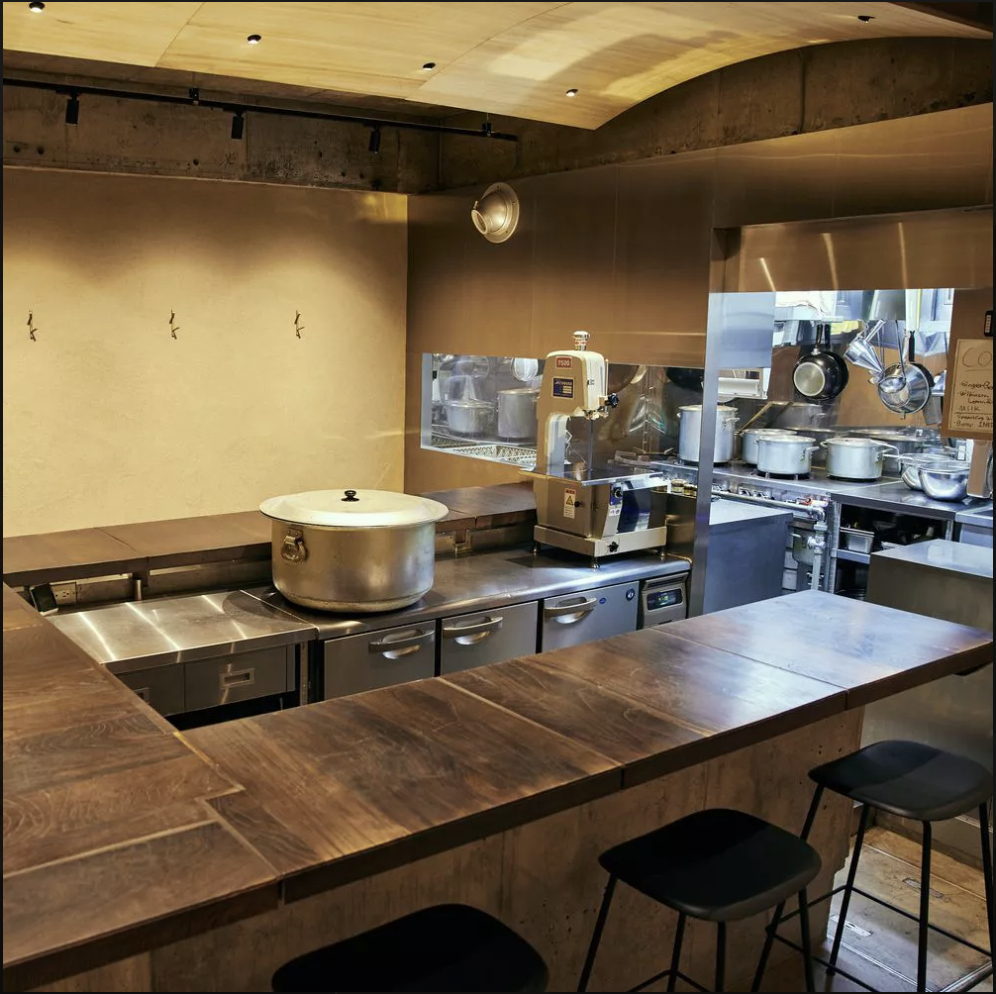
There's a basement in Kanda that has no right to exist.
No signage at street level. No menu to speak of. Ten seats, one pot, and a Japanese chef who decided somewhere around 2009 that biryani was the only thing worth doing with his life — and has spent every year since proving himself right.
Takamasa Osawa did not grow up eating biryani. He discovered it as a student in India, the way some people discover a calling and others discover a problem. For Osawa, it was both. He came back to Tokyo carrying the memory of something extraordinary and found a city that had no idea what he was talking about. Japanese curry culture was thriving — Kanda alone had enough curry houses to keep an entire neighborhood fed — but the real thing, biryani as he'd eaten it, cooked low and slow in a vessel the size of a small bathtub, the rice drinking in spiced meat juices for hours until every grain was doing three jobs at once? Nowhere. The dish was too labor-intensive, too time-consuming, too demanding of space and fire and focus for any restaurant running a full menu to bother with.
So Osawa bothered with it himself.
He started by gathering strangers on social media for private dinners. Then he taught himself to cook it, refining the recipe across dozens of attempts until it stopped embarrassing him. He rented restaurant kitchens during off-hours — a practice the Japanese call magari — and turned other people's spaces into his laboratory on weekday nights. He went back to India to eat more, study more, understand more. Then went back again. He founded the Japan Biryani Association, organized communal cooking sessions, and became, by sheer accumulated obsession, the most knowledgeable biryani person in a country that barely knew what biryani was. His guiding philosophy, stated without irony: Biryani or Die.
In August 2021, he opened Biriyani Osawa in Kanda — a basement restaurant with ten counter seats, a reservation system that fills within minutes of opening each week, and a policy so austere it borders on performance art. One biryani per service. Mutton most days, chicken on others, and occasionally something seasonally unhinged — lobster, hairy crab, oyster — that arrives unannounced and sells out before most people knew it was happening. The drinks list is cola, beer, or ginger beer, chosen because Osawa believes they're what actually works with the food. If you want something else, there are other restaurants.
What arrives at the counter is quietly stunning. The basmati is everything basmati should be — long-grained, separate, carrying fragrance without shouting about it. The oil is held back with real discipline, which means nothing sits heavy and the spicing has room to move. And move it does: the masala shifts as you eat, different notes surfacing mid-bowl like the dish is still deciding wh
at it wants to be. The raita cools things down without flattening them. A chili oil adds heat on your own terms. And at the end, spiced vanilla bean ice cream arrives like a closing argument — unexpected, a little strange, completely correct.
In 2026, the Michelin Guide gave Biriyani Osawa a Bib Gourmand, their recognition for cooking that delivers considerably more than its price suggests. For once, the honor felt almost understated.
Here's what makes Osawa's story genuinely remarkable, beyond the food itself: he had no inherited claim to this dish. No grandmother's recipe passed down through generations, no regional identity tied to a particular style, no cultural shorthand to lean on. He came to biryani as a pure outsider and decided that wasn't a disadvantage — it was a license to be rigorous in ways that familiarity sometimes prevents. Fifteen years of single-minded focus later, Indian-American diners are leaving his basement calling it the best they've ever had. Visitors who grew up eating biryani at weddings and dinner-table celebrations across the subcontinent are quietly recalibrating their benchmarks over a bowl in a Tokyo basement with no sign out front.
That's not a fluke. That's what devotion looks like when it refuses to stop.
The essentials
What to order: Mutton biryani is the move — it's the dish he built this around and it shows. Chicken is a worthy alternative on the days it's offered. If a seasonal special is on, abandon your plans and order it without reading the description first.
Pricing: Exceptional value for Tokyo, and remarkable value by any measure — roughly ¥2,000–3,000 per person all in. Michelin-recognized cooking at the price of a casual lunch.
Best for: Solo diners and serious food pilgrims. The counter format rewards focus over conversation — come to eat, not to catch up. A perfect entry point for the non-desi diner wanting to understand what biryani is genuinely capable of, and a quiet reckoning for the desi diner who thought they already knew.
How it compares: More precise and restrained than most biryani you'll find in London or New York; less theatrical than a full Hyderabadi dum service but more technically considered than almost anything in that conversation. Not trying to out-tradition the subcontinent — and that's exactly why it works. If you're j
udging by mastery of form rather than weight of heritage, Osawa belongs in a very short list.
Getting there: B1F, 1-15-12 Uchikanda, Chiyoda-ku, Tokyo. Reservations open one week in advance. Set your alarm — they go fast.
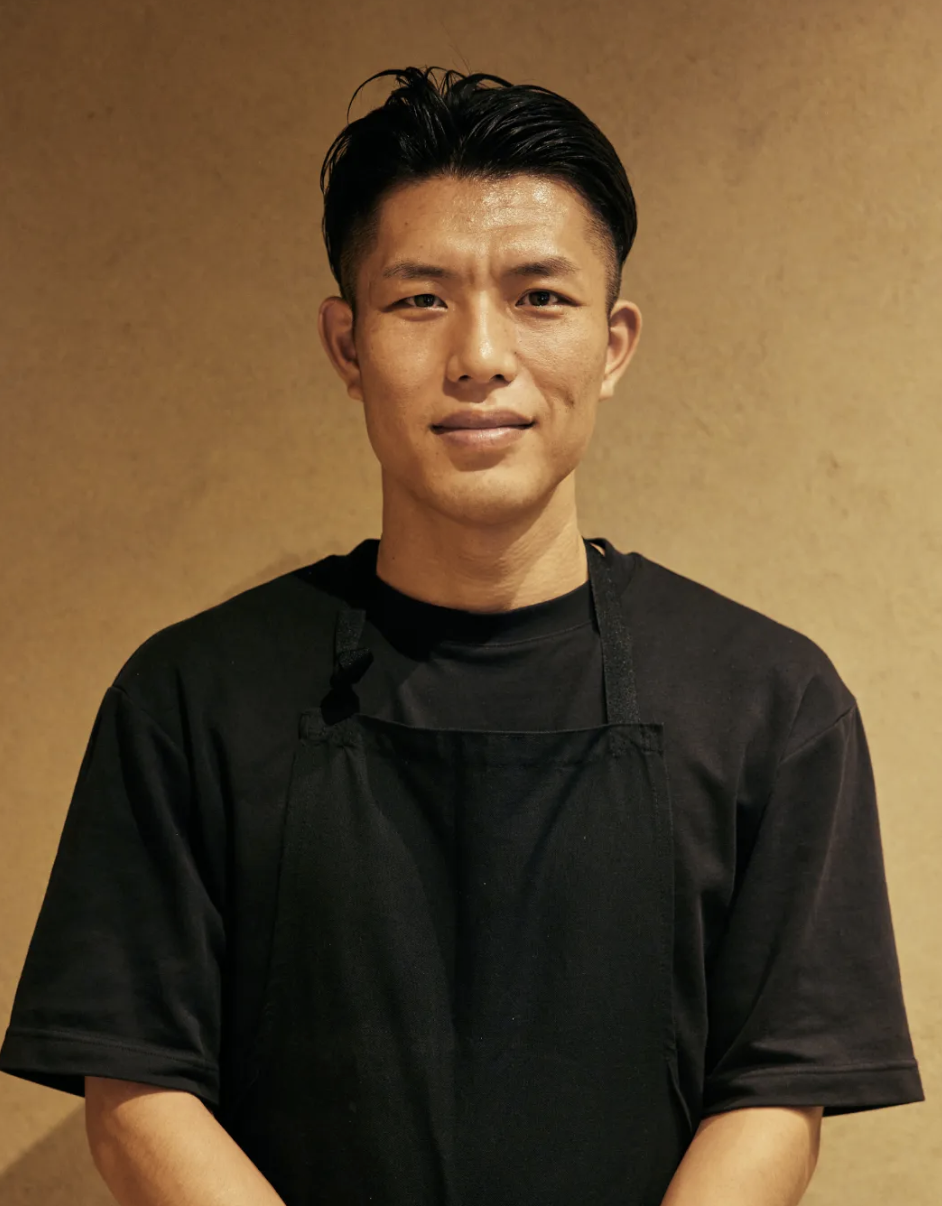
There is no neutral conversation about biryani. You cannot simply mention the word at a table of South Asians and expect calm. Within thirty seconds, someone will have staked a territorial claim, someone else will have disputed it with the energy of a Supreme Court attorney, and at least one person will be looking at their phone to pull up a Wikipedia article as evidence, which will immediately be dismissed as unreliable by everyone present. Biryani is not just food. It is identity compressed into a pot — and the argument about who makes it best is one of the most gloriously unresolvable debates in culinary history.
Let's start at the beginning. Or at least, as close to it as anyone can get.
Where Did It Actually Come From?
The honest answer is: nobody is entirely sure, and anyone who tells you otherwise is selling something.
What we do know is that biryani belongs to a family of rice-and-meat dishes stretching from the Persian pilaf through Central Asian plov to the layered rice preparations that spread across the Islamic world during the medieval period. The word itself almost certainly derives from the Persian birian, meaning "fried before cooking," pointing toward a technique of par-cooking rice before layering it with meat — though even this etymology has its skeptics who would like you to know they studied this at length and disagree.
The most widely accepted origin story places the dish's arrival in the subcontinent somewhere in the Mughal era — carried by Persian-speaking courtiers, soldiers, and merchants who moved between Samarkand, Isfahan, and the great cities of Hindustan. The Mughal court was a culinary laboratory of spectacular ambition, where Persian aesthetics collided with Indian spice networks, and the results were some of the most sophisticated rice preparations the world had seen. The royal dastarkhwan — the ceremonial spread laid before emperors — would have featured elaborate rice preparations scented with saffron, perfumed with rose water, layered with slow-cooked meat in a style that reads today as the direct ancestor of what fills our plates.
But here is where it gets complicated. Because while Mughal court cuisine provided the architecture, biryani as we actually know it — plural, regional, argumentative, intensely local — was born not in an emperor's kitchen but in the gradual drift of cooks, techniques, and spice philosophies across a subcontinent of staggering diversity. Every city that received this dish did what great culinary cities always do: it absorbed it, wrestled with it, made it argue with local ingredients and local palates, and eventually declared its own version the only version worth discussing.
Which brings us, inevitably, to the war.
Lucknow: The Aristocrat
If biryani were a person, Lucknowi biryani would arrive to dinner in a perfectly pressed sherwani, speak only in elaborate Urdu, and regard any form of loudness as a personal failing in whoever produced it.
Lucknow's biryani is the product of the Nawabs of Awadh — a cultured, Persian-inflected court that, particularly in the 18th and early 19th centuries, elevated the refinement of food into something approaching competitive theater. The Nawabs were legendary patrons of the kitchen, and the cuisine that emerged from their court — built around dum pukht, the slow-cooking technique in which meat and rice are sealed together in a heavy-bottomed deg with a ring of dough and left to cook entirely in their own trapped steam — is one of the most genuinely sophisticated cooking methods in existence.
Lucknowi biryani is constructed on this dum principle. Rice and meat are cooked separately — the meat going through an elaborate process of marination, partial cooking, and careful layering — before being sealed together and finished. The result is a biryani of uncommon delicacy. The spicing is aromatic rather than aggressive: cardamom, mace, kewra, saffron doing quiet, intricate work beneath the surface. The mutton, invariably, is soft enough to suggest it never wanted to be anything other than this. The rice grains are long, separate, perfumed, each one carrying a faint trace of the fragrance sealed in with it.
Lucknowi biryani does not shout. It whispers. Its devotees will tell you — with considerable justification — that this restraint is precisely what separates a dish with genuine culture from one that is merely satisfying.
The criticism, and there is always a criticism, is that it pulls its punches. That in its relentless pursuit of elegance it has given away the primal, slightly undignified pleasure of food that hits you somewhere below the intellect. To which a Lucknowi food person will raise one perfectly shaped eyebrow and say nothing, because they consider the entire argument beneath them.
The great addresses are well established: Dum Pukht at the ITC Maurya in Delhi carries the Awadhi tradition into fine dining with considerable grace, and the older, scruffier, more charismatic establishments of Lucknow itself — Wahid Biryani, still operating from a kitchen that feels like a portal to the nineteenth century, and the legendary Idris ki Biryani, which has operated out of a small street-facing setup for over a century with the confidence of something that has never once needed to advertise.
Hyderabad: The Emperor
Here is where the volume goes up considerably.
Hyderabadi biryani is, by almost any measure of global recognition, the most famous biryani in the world. It is what most people outside the subcontinent picture when they say the word. It is the version that has conquered airport food courts, diaspora restaurants, and the expanding international appetite for South Asian food. It is bold, aromatic, deeply spiced, aggressively golden with turmeric and saffron, and completely at peace with every single one of these qualities.
The Hyderabadi story begins with the Nizams — the rulers of the Deccan from the early 18th century onward, who presided over one of the wealthiest and most culturally layered states in South Asia. Hyderabad sat at a culinary crossroads: Mughal traditions from the north met Telugu and Marathwada flavors from the south, and the kitchen that emerged from this collision had an intensity and layering that belonged entirely to this one city. The Nizami court was famous for the scale of its hospitality — reportedly employing hundreds of cooks and producing spreads that took days to prepare — and biryani was the centerpiece around which everything else arranged itself.
What makes Hyderabadi biryani technically distinct is the kachchi method: raw, marinated meat — typically mutton, though chicken came along later and democratized the whole enterprise — is layered directly with raw rice and cooked simultaneously under dum, so that the juices from the meat rise and perfume the rice from below while the steam presses down from above. The dish essentially cooks itself from both directions at once. This is more technically demanding than cooking meat and rice separately, requires precise heat management and good instinct, and when it goes wrong it goes memorably wrong. When it goes right — and at the best Hyderabadi restaurants, it goes very right — it produces something almost alchemical: rice saturated with concentrated spiced meat essence, each grain carrying more information than you're quite prepared for, the whole thing finished with fried onions and a heat that arrives slowly and then simply refuses to leave.
Cafe Bahar in Himayatnagar has been producing this with metronomic consistency since 1975, and the permanent queue outside has become a kind of performance review that no critic could improve on. Shah Ghouse near Tolichowki serves a version so densely constructed that first-timers occasionally need a moment of quiet reflection afterward. And then there is Paradise — the institution that launched a thousand branches and a thousand arguments — still operating from its original Secunderabad location, still impossibly crowded, still producing a biryani that tastes like it was designed by a committee that agreed on exactly one thing: more.
Hyderabadi biryani will not be ignored. It does not do subtle. Lucknow considers this a character flaw. Everyone else considers it the point.
Calcutta: The Maverick
And then there is the potato.
Calcutta biryani is the one that provokes the most theatrical outrage among purists, primarily on account of this single ingredient — a boiled potato, golden-fried, sitting among the rice and meat with the unbothered serenity of something that knows exactly why it's there. In Calcutta, it has been there for nearly 150 years. And it is, for the record, absolutely delicious.
The history here is unusually specific and contains the right amount of drama. When the last Nawab of Awadh, Wajid Ali Shah, was deposed and exiled by the British in 1856, he relocated his court — and critically his cooks — to Calcutta (now Kolkata), settling in a suburb called Metiabruz where he spent the rest of his days reconstructing as much of Lucknow as geography would allow. The Nawab's resources had contracted significantly from their Awadhi peak, and the widely told story — whether precisely accurate or simply too good to abandon — is that his cooks began extending the meat in the biryani with potato, a cheaper and more available ingredient that had the additional, unanticipated quality of absorbing the cooking juices from below with extraordinary effectiveness. The potato stayed. It became structural. And a distinctly Bengali-Nawabi hybrid was born from the collision of royal technique and practical necessity.
Calcutta biryani carries its Awadhi inheritance in its spicing — lighter than Hyderabadi, heavily perfumed with ittar and rose water, restrained where Lucknow is restrained. But the boiled egg (another Calcutta addition), the potato, and the slightly more rustic execution give it a generosity that is entirely its own invention. There is something almost poignant about it — a royal dish adapted for leaner circumstances, carrying its aristocratic origins in one hand and acknowledging the weight of real hunger in the other.
Arsalan in Park Circus is the benchmark — operating for decades and now spread across multiple branches, each as chaotic and rewarding as the last. Aminia, established in 1929, is older and holds more sentimental gravity for those who grew up eating there. Shiraz Golden Restaurant on Park Street offers a slightly richer, more opulent version that has its own loyal constituency. All three will give you something that tastes unmistakably of Calcutta — layered, slightly melancholic, deeply good.
Karachi: The Street Fighter
Cross the border — notionally, in your imagination, since this culinary journey requires no visa — and biryani undergoes a full personality change.Karachi biryani is not concerned with your refinement. It is not performing subtlety for an audience that might appreciate it. It has somewhere to be and something to prove, and it will make both abundantly clear before the first bite is finished. Pakistani biryani, and Karachi's in particular, leans toward a style that is spicier, bolder, and more unapologetically oily than its Indian counterparts — built for a city that has always operated at full throttle and expects its food to match the pace. The masala is constructed with conviction, the color is a deep, assertive red, and the ratio of spice to everything else reflects a cook who has genuinely never entertained the thought that maybe this is enough.
What further defines Karachi biryani is its plurality. The city is a culinary mosaic of communities that arrived from across the subcontinent at Partition and afterward, each carrying their own version and their own loyalties, and the resulting style has absorbed Sindhi, Muhajir, Balochi, and Punjabi influences into something that could only have been produced here. Sindhi biryani — perhaps the most distinctive sub-variant — adds both potato and dried plums (aloo bukhara) to the pot, a sour, fruity note that cuts through the accumulated richness with a precision that surprises you every time, even when you're expecting it.
Student Biryani, started in 1969, is the name every Pakistani abroad mentions within the first sentence — now a national brand with international branches, producing a version that divides loyalists cleanly between those who consider it the definitive template and those who consider the franchise expansion a form of dilution. The more interesting conversation, as always in Karachi, happens on Burns Road and in the older lanes of Saddar, where biryani is ladled from blackened degs over open fires and the experience arrives without ambiance, plating, or any concern whatsoever for how it photographs.
Dhaka: The UnderdogDhaka's biryani doesn't get the column inches of Hyderabad or the romantic backstory of Calcutta, and this is one of the more significant oversights in food writing.
The kacchi biryani of Dhaka is something genuinely distinct, carrying strong Mughal influences filtered through a Bengali sensibility that softens the spicing, amplifies the aromatics, and produces a dish of real grace. The technique is rigorous — high-quality mutton, marinated in yogurt and carefully measured spices, layered with rice and sealed for a slow cook over controlled heat. When done correctly, the result is tender, deeply perfumed, and quietly authoritative.
But what truly separates Dhaka's biryani from every other version on this list is the rice itself. Where Lucknow, Hyderabad, Karachi, and Calcutta all reach for long-grained basmati — that tall, slender, aromatic variety that stretches and separates under heat — Dhaka reaches for something entirely its own. The traditional choice is kalijeera or chinigura rice, a short-grained, locally grown Bangladeshi variety with a natural nuttiness and a faint floral scent that basmati cannot replicate. The grains are smaller and slightly rounder, they absorb the meat juices differently — more completely, more immediately — and the texture of the finished biryani is closer, denser, more intimate than the airy, grain-separated ideal that other cities pursue. It is a fundamentally different eating experience, not a lesser one: where basmati biryani is architectural, chinigura biryani is enveloping. One presents itself; the other pulls you in.
This rice is a point of fierce local pride in Dhaka and barely known elsewhere, which tracks precisely with Dhaka's general reputation in the biryani conversation — undersold, underlauded, and better than its press suggests.
Haji Biryani in Old Dhaka, established in 1939, is the institution against which all others are measured — a restaurant that has made exactly one thing for over eighty years and considers this a perfectly complete professional life. The queue forms before the pots open. Fakhruddin Biryani is the modernized, more widely available version — consistent, clean, and produced with an efficiency that reflects a kitchen that has refined the same process thousands of times and stopped second-guessing itself entirely.
The Verdict (Which Will Satisfy Nobody)
Here is the only honest conclusion to the great biryani argument: there is no best biryani. There is only the version that is right for what you need it to be at this particular moment, at this particular table, with this particular hunger.
Need ceremony — food that carries you somewhere more elegant than you currently are, that whispers rather than announces, that treats restraint as a form of respect? Lucknow.
Need to be floored — something that takes over the meal and then lingers in your memory like a houseguest who has clearly no intention of leaving? Hyderabad.
Need comfort with a side of history — a dish that carries an entire city's story in its layering, that slots a potato into the pot without apology and turns out to be right? Calcutta.
Need fire and speed and a biryani that matches the energy of a city that never slows down? Karachi.
Need honesty — a dish that doesn't perform, that uses rice no other city thought to use, and produces something quieter and more enveloping for it? Dhaka.
The argument will continue. It should continue. The day South Asians agree on which biryani is the best is the day something essential and irreplaceable about the culture has quietly disappeared.
Order another plate. Resume the argument.
The Great Biryani Argument: Origins, Obsessions, and the Dish That Divided a Subcontinent
By Kazi Zaman, Contributor.
Should a Michelin Star Really Guide Me to Where I Need to Eat next?An honest look at the world's most powerful — and most limited — dining credential
By Kazi Zaman, Contributor
Here is a thought experiment. Picture the dal makhani at a specific dhaba in Amritsar that has been cooking the same recipe for forty years over the same wood fire. The kind of dish that stops conversation at the table. The kind that any Punjabi person who has eaten there will tell you, without hesitation, is among the greatest things they have ever tasted. Now ask yourself: will a Michelin inspector ever walk through that door? The answer is no. Not because the food isn't extraordinary — it is — but because the room doesn't have tablecloths, the service doesn't have choreography, and the cuisine exists entirely outside the framework the Guide was built to evaluate. And that tells you almost everything you need to know about what a Michelin star actually measures.
Because the star has never been a measure of great food. It has always been a measure of a particular kind of dining experience — one rooted in French fine dining tradition, built around technical precision, classical refinement, and a very specific idea of what a serious restaurant looks and feels like. This is not a neutral set of criteria. It is a cultural preference that has been mistaken, over many decades and millions of meals, for a universal standard.
The origin story is instructive. The Michelin Guide was created in 1900 by a French tire company to encourage people to drive more, thereby wearing out their tires faster, thereby buying more tires. The inspectors were sent out not to identify the world's most exciting food but to find restaurants worth making a road trip for. The whole enterprise was a marketing exercise for rubber. That it became the global benchmark for culinary excellence is one of the more remarkable accidents in the history of food — and one worth interrogating before you let it determine where you spend your money.
None of this means the Guide is worthless. At its best it identifies genuine excellence with a consistency that no other system has matched at scale. The problem is not the process — it is the limits of what that process can see. BiBi in London makes the point with uncomfortable precision. A chef with an Oxford PhD and a CV built in Michelin-starred kitchens, cooking some of the most technically accomplished and culturally rooted Indian food in the world, in a room that any inspector would recognize as serious. By every reasonable measure, BiBi is a Michelin star restaurant. It does not have one. The absence is baffling, widely discussed in the industry, and entirely consistent with a system that has historically struggled to fully evaluate South Asian cuisine on its own terms.
Gymkhana has two stars and deserves both. But for every Gymkhana the Guide recognizes, there are a dozen extraordinary desi restaurants it walks straight past — in Birmingham's Ladypool Road, in Manchester's Rusholome, in Tooting, in Jackson Heights — cooking food of genuine depth and distinction that will never register because it doesn't fit the template. The Inspector moves on. The community keeps eating there anyway, because they know something the Guide doesn't.
That knowledge — the insider knowledge of a community that grew up with a cuisine — has always been a more reliable dining guide than any published list. The most thrilling desi meal you eat this year will almost certainly come from a recommendation passed between people who actually know the food, not from a red book published by a tire company.
Use Michelin as one input among many, particularly when navigating an unfamiliar city. But don't let it be the last word. The best meal of your life probably doesn't have a star. It has a line out the door, a laminated menu, and someone's grandmother in the kitchen.
Michelin will never tell you that. We will.
Where has your best desi meal been — starred or otherwise? Tell us.
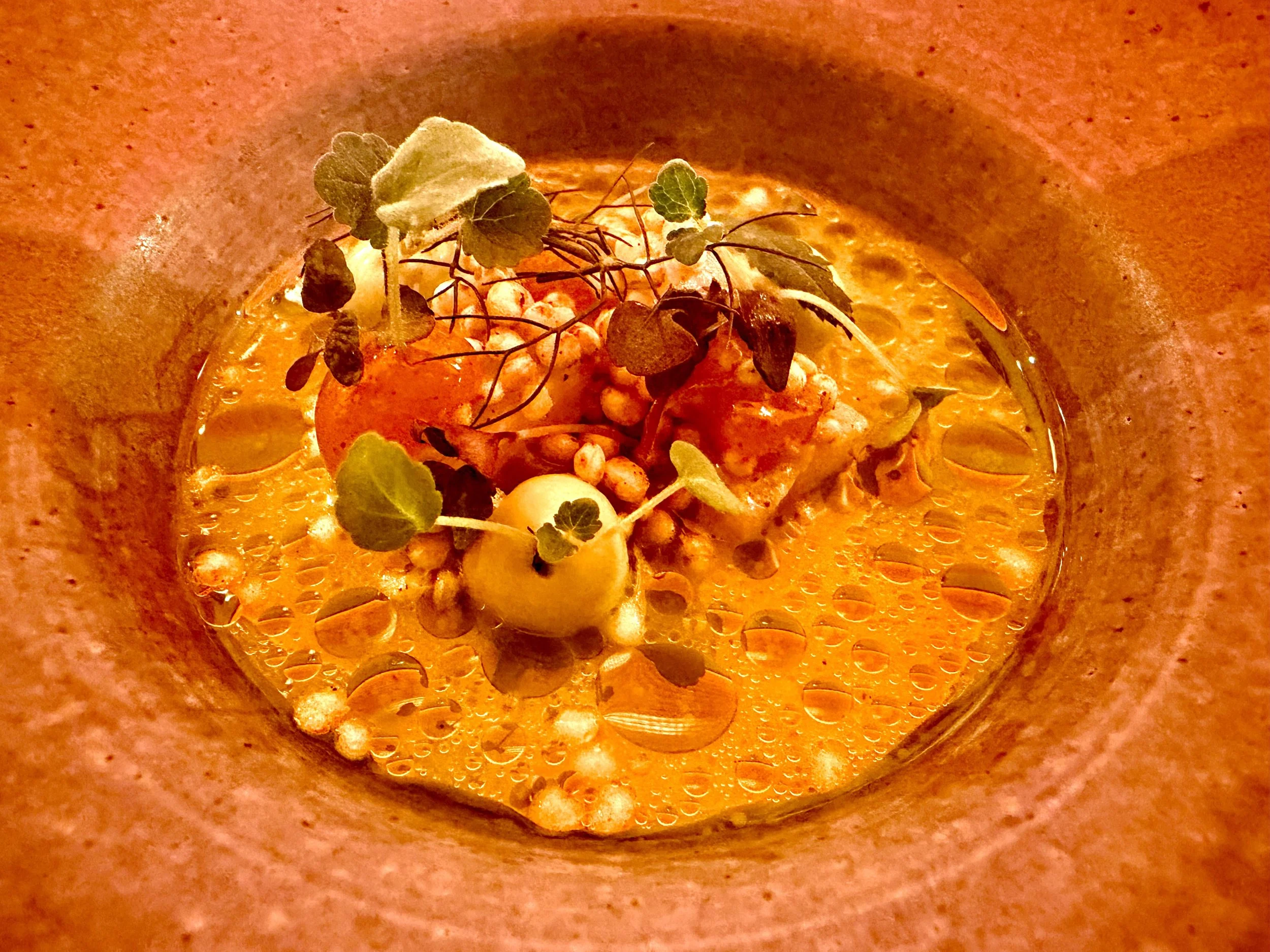
There's nimbu pani, and then there's Bibi's “nimbu pani”— sharp, layered, and one of the more surprising things to cross your lips in London. Photo by Desifoodfix.
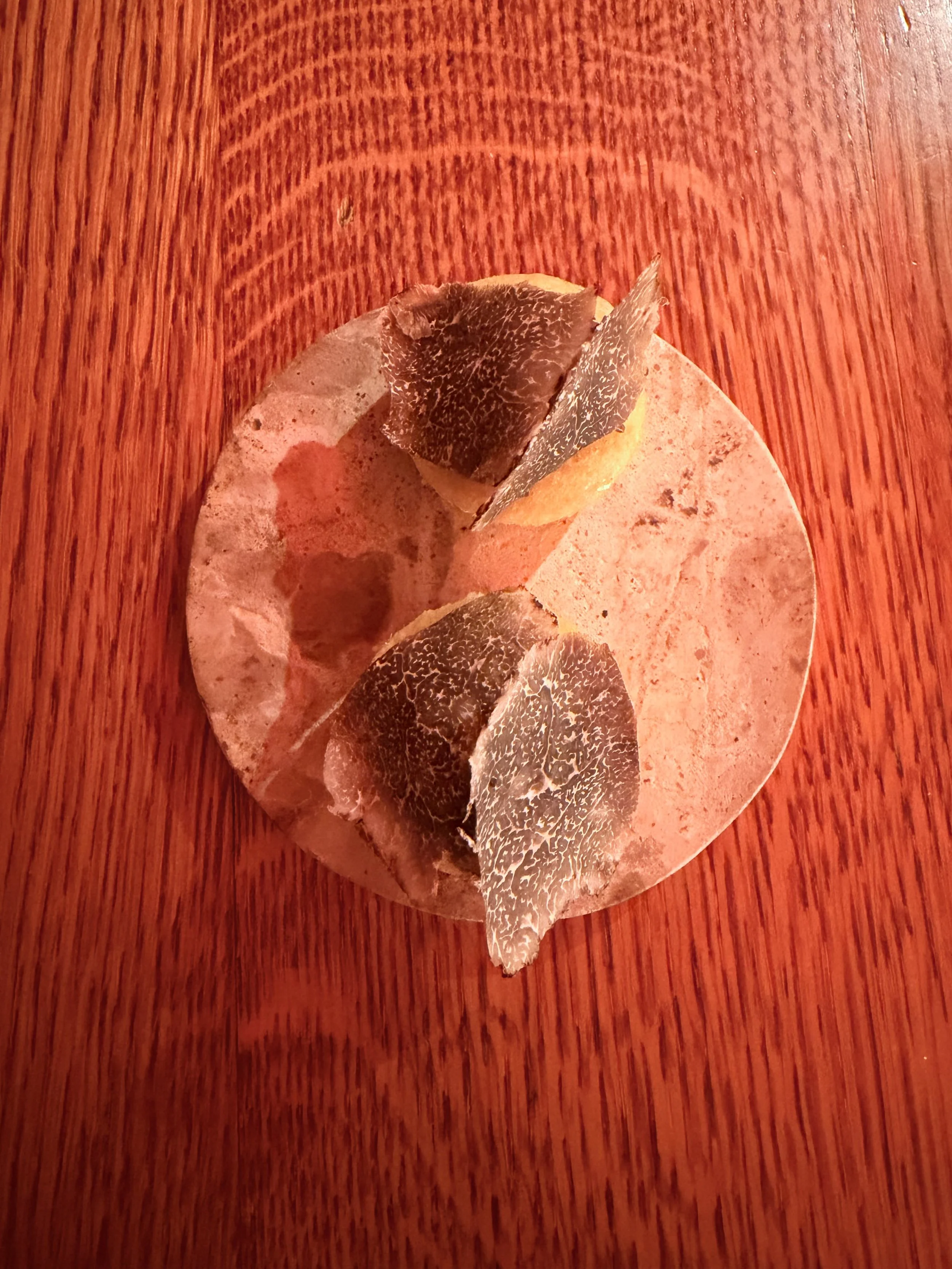
Bibi's dhokla pulls off a neat trick: Chet Sharma's grandmother's recipe, that spongy Gujarati classic, finished with a shower of truffle she almost certainly never had in mind for it.
Photo by Desifoodfix.
Why Does Indian Food Still Get Tipped Less Than Italian?The uncomfortable truth about how we value cuisine — and whose labor we respect
By Kazi Zaman, Contributor.
Here is a scenario that plays out every day across Britain and America. Two couples go out for dinner on the same evening in the same city. One goes to an Italian restaurant — candlelit, a respectable wine list, pasta made in-house. The other goes to an Indian restaurant of equivalent quality, equivalent ambition, equivalent price point. The Italian couple tips generously, without much deliberation. The Indian couple's table, statistically speaking, tips less. The server at the Italian restaurant goes home with more money. Nothing about the quality of the cooking explains this. The cuisine does.
This is not a comfortable thing to say, but it is a documented one, and the restaurant industry has been quietly aware of it for years. The question worth asking is not just whether it happens, but why — and what it tells us about how we have been conditioned to think about whose food is worth what.
A large-scale study of over two million restaurant reviews conducted by researchers at Stanford University found something that will surprise nobody who has worked in an Indian restaurant and nobody who has thought carefully about how food and race intersect. Controlling for price, neighbourhood, and every other relevant variable, non-Western immigrant cuisines — Indian and Mexican specifically — were consistently framed in lower-status terms than European cuisines like French and Italian. The language used to describe Indian restaurants centred on affordability and hygiene. The language used for French and Italian restaurants centred on experience, craft and occasion. Same city. Same price. Different vocabulary. Different tip.
The vocabulary matters because language shapes perception, and perception shapes behaviour. When a cuisine is consistently described in terms of cheapness — even implicitly, even by people who genuinely love the food — it creates a ceiling. It tells the server, the chef, and ultimately the restaurant owner that this food exists in a particular register, and that register does not command the same financial respect as the one where the menu is in Italian and the waiter introduces himself by name.
Consider what this means in practice. The kitchen brigade at a Michelin-recommended Indian restaurant in London is working at least as hard as its counterpart two streets away at a French bistro of comparable standing. The ingredients are often more complex, the spice knowledge more intricate, the cooking techniques more demanding. The front of house is navigating dietary requirements — halal, vegetarian, Jain — with a specificity that most European restaurants never have to consider. And yet the tip, the part of the evening that most directly translates into a living wage for the people doing the work, tends to reflect the old assumptions rather than the present reality.
Part of this is generational conditioning that runs deep. Indian food in Britain and America built its reputation on being inexpensive. The curry house and the cheap takeaway did enormous cultural work — they introduced millions of people to a cuisine that would otherwise have remained invisible to them — but they also embedded a price expectation that has proven stubbornly resistant to revision. Even as Gymkhana earns two Michelin stars and Semma tops the New York Times restaurant list, the ghost of the cheap curry house still haunts the cultural imagination. People who would never dream of under-tipping at a neighbourhood Italian place think nothing of leaving fifteen percent at an Indian restaurant that is working twice as hard.
There is also something more uncomfortable underneath all of this. The hierarchy of cuisines in the Western world has always mapped, with suspicious neatness, onto a hierarchy of cultures. French and Italian food is aspirational. Indian and Mexican food is ethnic. The word ethnic itself is the tell — it is a category that exists only in relation to a perceived norm, and that norm has always been European. Tipping patterns are just one small expression of a much larger, much older set of assumptions about whose culture produces art and whose produces product.
The Indian restaurant industry is not waiting for this to change on its own. Gymkhana charges what it charges. BiBi adds the service charge to the bill. Musaafer in Houston offers a tasting menu that competes with the finest restaurants in America. They are making the argument through the food itself, one exceptional plate at a time.
But the person clearing the table at the end of the night is still waiting for the rest of us to catch up.
Have you noticed the difference? Tell us — this is a conversation worth having.
Has Indian Food Finally Arrived in the US? The numbers say yes. The full story is more interesting than that.
By Kazi Zaman, Contributor
Consider what happened in New York in 2025. The city's most argued-over, most fiercely contested restaurant list — the New York Times' 100 Best Restaurants — put an Indian restaurant at number one. That restaurant was Semma, a small Greenwich Village room dedicated entirely to the food of Tamil Nadu, led by Chef Vijay Kumar, a man who grew up in a small South Indian town and described the moment as something he had never once dared to imagine. Standing first in a city of 27,000 restaurants, evaluated against every cuisine from every corner of the world — if Indian food in America needed a single moment to point to, that is probably it. But arrival is a complicated word, and the more honest answer is: it depends entirely on where you're standing and how far back you're willing to look.
Because this story didn't begin in 2025. It began much earlier, in quieter rooms, with less fanfare.
When Vikram Sunderam opened Rasika in Washington DC in 2005 alongside restaurateur Ashok Bajaj, most of America was not ready to have a serious conversation about Indian fine dining. Sunderam changed that, patiently and without drama, building a restaurant that collected James Beard Awards and Washington Post four-star ratings and became the place a sitting US president chose to celebrate his birthday — twice. Rasika didn't shout about what Indian food could be. It simply demonstrated it, year after year, until the argument became undeniable. Two decades on it remains one of America's essential restaurants and the foundation on which much of what followed was built.
Further south, in Houston, a different kind of statement was being made. Musaafer — the name means traveller in Hindi — was conceived around a genuinely remarkable idea: send the chef on a hundred-day journey across all of India's states, collect the stories, and bring them back to the table. Executive Chef Mayank Istwal did exactly that, and what emerged is a restaurant of extraordinary ambition housed in a ten-thousand-square-foot space that feels more like a palace than a shopping mall. The Michelin Guide arrived in Texas in 2024 and gave Musaafer a star immediately, recognising what Houston's desi community had known for years — that this was cooking of serious intent, rooted in the full breadth of the subcontinent, not the usual edited highlights.
In New York, Vikas Khanna — Michelin-starred chef, MasterChef India judge, and one of Indian food's most recognisable global ambassadors — opened Bungalow in the East Village in 2024, describing it as perhaps his most personal project yet. The menu spans Kashmir to Kerala, the seekh kebab layered six ways deep, the chicken tikka finished with Amul cheese as a quiet nod to childhood. Bungalow earned three stars from the New York Times and promptly became one of the hardest reservations in the city.
What makes this current moment genuinely different from previous waves of interest is the wholesale rejection of the generic. The group that perhaps best embodies this shift is Unapologetic Foods — the restaurant collective built by Mumbai-born Chef Chintan Pandya and restaurateur Roni Mazumdar. The name came from a real moment: a customer once demanded Pandya apologise for his food being too spicy. He declined. That refusal to dilute, to soften, to second-guess the cuisine for a non-Indian audience became the founding philosophy of a group that now includes Dhamaka — serving fiercely regional Indian food you struggle to find even in India's own restaurants — and Semma, where Chef Vijay Kumar's Tamil Nadu cooking earned a Michelin star and ultimately that New York Times number one. Pandya himself won the James Beard Award for Best Chef: New York State in 2022; Kumar followed in 2025. Two James Beard Awards. One restaurant group. The cuisine, cooked entirely on its own terms, had arrived at America's highest table.
And now London is watching — and following. The wave of celebrated British Indian restaurants heading stateside is perhaps the clearest signal yet that America has become a market worth competing for. Gymkhana, the two-Michelin-starred jewel of Mayfair, has already opened in Las Vegas. Its sibling restaurant Ambassadors Clubhouse is headed to Manhattan's NoMad neighbourhood. Kricket, the modern Indian small-plates concept with a devoted following in London, is set to debut in Manhattan shortly after. And Dishoom — arguably the most culturally embedded Indian restaurant brand in Britain, beloved for its Bombay café atmosphere and famously long queues — confirmed its New York opening for 2026 after a pop-up at the Meatpacking District's Pastis that sold out in under five minutes and left 20,000 people on a waiting list. That number alone tells you something significant about where American appetite for this food now stands. The British Indian dining scene spent a decade building the template. America, it seems, is ready to receive it.
The gap between what Sunderam, Khanna, Istwal, Pandya, Kumar and their contemporaries are doing and what passes for Indian food in most mid-sized American cities remains significant. The deeper question is whether the momentum concentrated at the top will eventually travel outward — whether a generation of young Indian American cooks, emboldened by what they're witnessing, will carry this further than their predecessors imagined possible.
The signs say yes. But arrival, in any meaningful sense, means being present everywhere. That part of the journey is still underway.
What's the best Indian meal you've had in the US? Tell us — we're building a guide.
Is Indian Fine Dining in London Becoming Too Expensive?An honest conversation the industry needs to have.
By Kazi Zaman, Contributor
Let's start with the numbers, because they don't lie. An evening tasting menu at BiBi will cost you £145 a head before you've touched a drink. At Gymkhana, the tasting menu sits at a similar altitude. Kanishka's seven courses come in at £120, with wine pairing adding another £80 on top. Benares — one of the longest-standing names in London's Indian fine dining scene — charges £135 for its tasting menu, with an optional wine pairing that costs almost as much again. Add a cocktail at the start, a digestif at the end, a shared side or two, service charge — and you're looking at an evening that can clear £200 per person without anyone at the table doing anything particularly extravagant.
The question isn't whether these restaurants are good. Most of them are. The question is who, exactly, they are now for.
There is a particular irony buried in this conversation. Indian food in Britain built its entire popular reputation on accessibility. The neighbourhood curry house — open late, generous with portions, gentle on the wallet — was where generations of British people fell in love with the cuisine. It was food that belonged to everyone. The move toward fine dining was always going to change that, and nobody is arguing that ambition should be rationed. But there is something worth examining when the cuisine that arguably democratised eating out in this country now occupies some of the most expensive tables in one of the world's most expensive cities.
The cost pressures are real and they deserve acknowledgement. London's hospitality industry is operating under a set of conditions that would test any business — chronic staff shortages, energy costs that have shifted dramatically over the past few years, ingredient prices that continue to climb, and the brutal economics of Mayfair and Soho rents that make any calculation of value almost impossible to win. A tasting menu at £145 in central London in 2025 is not the same proposition as the same number five years ago. Chefs and restaurateurs are not printing money. They are, in many cases, barely surviving.
And yet.
The desi community — the very community whose cuisine underpins this entire category — is increasingly priced out of experiencing it at this level. A British South Asian family that grew up eating extraordinary food at home, that has a genuine connection to these flavours and traditions, finds itself looking at a table at Gymkhana as a once-a-year event at best. The food of their grandmothers has become a luxury good. That is, at minimum, worth sitting with.
There is also a wider question about what these prices communicate to the broader dining public. London already has a well-documented problem with fine dining feeling like a performance for the wealthy. When Indian fine dining joins that bracket without the Michelin star pedigree that typically justifies these numbers in French or Japanese cuisine — with a handful of honourable exceptions — it creates a perception problem. It invites the question of whether the pricing is proportionate to the experience, or whether Mayfair postcodes and beautiful interiors are doing some of the heavy lifting.
The most compelling counter-argument is that the elevation of Indian food to this level is, in itself, a kind of justice. For decades, the cuisine was undervalued — both commercially and critically. The assumption that Indian food should be cheap was never really about economics; it was about bias. Every restaurant that charges Gymkhana prices is, in some sense, making a statement about what this food is worth. That argument has genuine force.
But worth and accessibility are not the same thing. A cuisine can be worthy of the highest prices and still be made more available — through lunch menus, bar seats, more accessible second concepts — without any sacrifice of ambition. The restaurants that understand this already offer it. BiBi's four-course lunch at £65 is one of the city's great bargains. Kricket built an entire model around quality without the overhead of fine dining theatre. Ambassadors Clubhouse manages to hold a Michelin star while feeling like a place you can actually celebrate in rather than merely admire.
The path forward isn't lower ambition. It's more imagination about who gets through the door. Indian fine dining in London has spent a decade earning its seat at the table. The next challenge is making sure the table itself is a little wider.
What do you think? Is the price worth it — or has Indian fine dining priced out the very people it should be feeding? Tell us.