

A 1927 Delhi tea stall that became a 120-store high-street habit, the dhabas of the Grand Trunk Road, the smashed bhaars of Kolkata — and why the answer was never really about the tea.
By Kazi Zaman
The cup arrives faster than it has any right to, which is the first thing to understand about Chaiiwala. You order a karak, and before you have finished fishing out your card it is in your hand — deep amber, milk-heavy, a low hum of ginger and cinnamon riding over a blend the company will only describe as seven spices and a secret. It is good. Reliably, almost suspiciously good, the same in Leicester as in Luton departures as in a Dubai mall. And that consistency is exactly what makes you squint at the cup and ask the question every desi has fought about at least once, usually loudly, usually with someone who is wrong: is this the best chai anywhere?
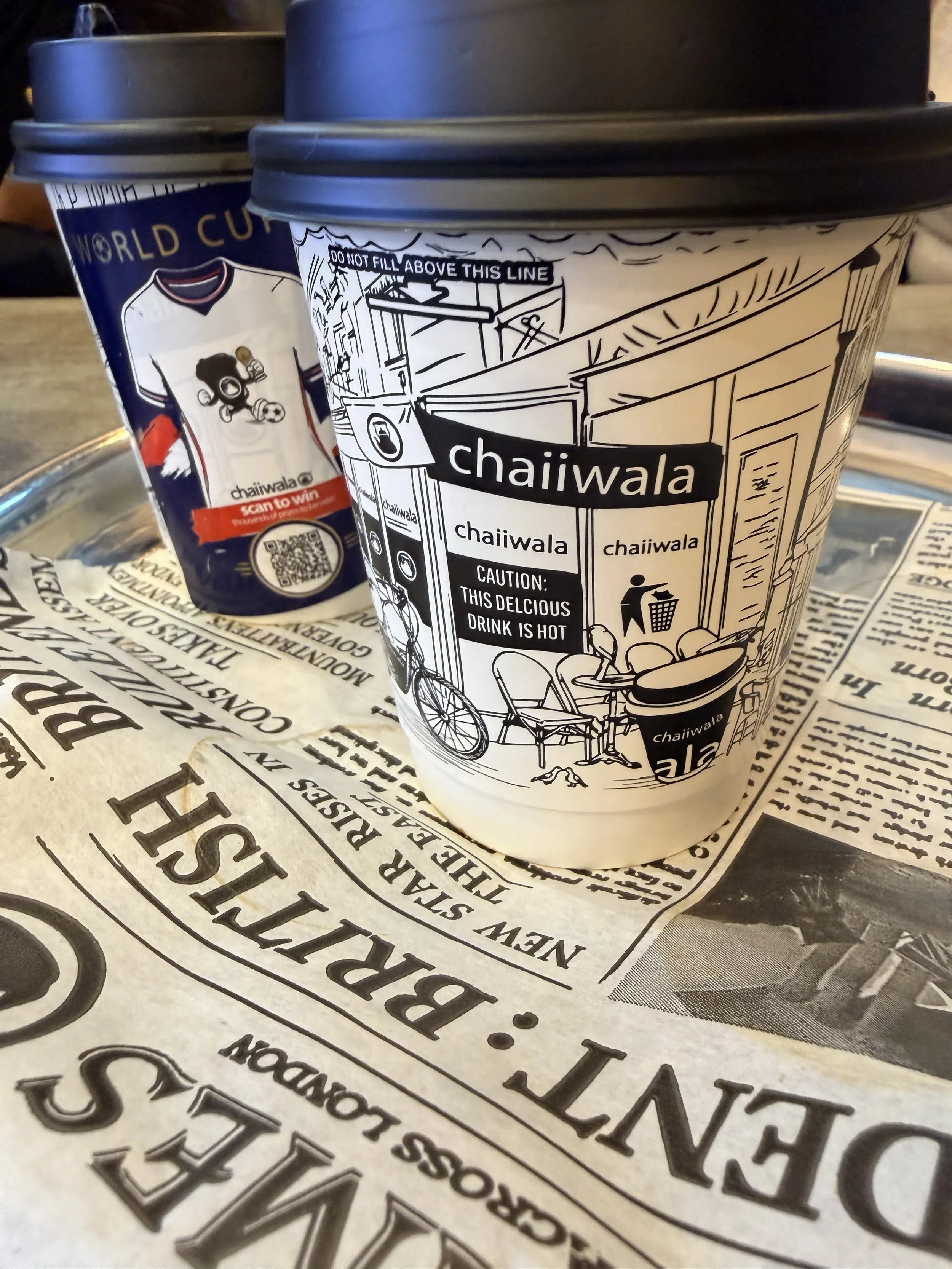
The brand wants you to believe the line runs straight back to Delhi. It does, more or less. The recipe traces to a tea stall a great-grandfather ran in the city in 1927, carried down through the family until two Leicester-born descendants — Muhummed Ibrahim, a trained pharmacist, and Sohail Ali — decided in 2015 that Britain's most multicultural city somehow had nowhere to get a proper cup of chai. Their first branch was a converted bin store on Evington Road. Their mothers cooked the early street food off family recipes. A decade later it is a 120-store operation across the UK, Canada, and the UAE, with a 24-hour drive-thru in Blackburn, an airport unit at Luton, and the stated ambition to hit 500 sites worldwide. Somewhere north of a hundred million cups of karak have been poured. This is no longer a tea stall. This is the desi answer to Costa.
And that, not the cup itself, is the genuinely interesting thing about Chaiiwala. Because the chai, honestly assessed, is a chain product. It is pre-brewed and held so it can move at high-street speed, which means it trades the ragged edge of a fresh pour for the dependability of a cup that never lets you down and never quite startles you either. It is comforting in the way a good habit is comforting. What Chaiiwala actually achieved was never a single transcendent cup — it was making a good cup ordinary, available, scaled onto a grey Tuesday between a dentist appointment and the school run. That is a different and arguably harder magic.
And Chaiiwala is not even the only chain running this exact play. A continent away, in a modest cafeteria in Dubai's Al Mamzar in 2004, a young man named Rafih FiLLi stirred a pinch of saffron into a cup of milk tea, borrowed the nickname his school friends had stuck him with, and accidentally built an empire. That cup — Zafran chai, Assam leaf turned gold with Kashmiri saffron — became the Gulf's most adored brew, then refused to stay put: some thirteen countries, a Harvard case study, and, by 2022, a storefront on Hillcroft in Houston, the spine of that city's desi corridor, pouring until two in the morning. Where Chaiiwala stakes everything on a seven-spice karak, FiLLi stakes it on saffron. Both are really betting the same bet — that the ritual will follow its people wherever they land, and that someone, eventually, will be homesick enough to pay for it.
But "anywhere" is a big word, and it takes you a long way from a retail park.
Because somewhere off the Grand Trunk Road, a driver has pulled his rig over and lowered himself onto a charpai strung with fraying rope, waiting on a glass of chai that contains, as far as anyone can tell, no water at all. It is built on milk alone, cooked down low over a flame that has not gone fully out in years, until the tea turns the color of wet earth and clings to the sides of the glass. No trademarked spice blend. No seasonal cup with a slogan on it. Just a soot-black pan, a man who has made this exact glass ten thousand times, and a result strong enough to reset a nervous system. This is what dum means in a cup — not a flavor note but a force, the staying power that gets a driver to the next town. One glass and the road ahead looks survivable. That is the bar.
And then there is Kolkata, which treats chai less like a drink than like a civic right. At the Russel Dhaba end of Russell Street, near the Middleton crossing, the kettle is going before the city wakes and still going long after it should have stopped — which is how the place ended up hosting three generations of post-midnight wind-downs. Hardly anyone sits. People drink standing on the pavement, or they stay in the car and have it carried to the window, the tea arriving in a small unglazed clay cup — a bhaar — that lends it a faint taste of the ground it was thrown from, a mineral edge no paper cup will ever counterfeit. Drain it, then throw it down. The clay bursts on the road and you feel a small, unreasonable delight every single time, because the cup was always meant to go back to the dirt. And if you want the version that comes with something close to grace, it is the langar chai ladled out at a gurdwara: cardamom-heavy, endlessly refilled, handed to stranger and regular alike, asking nothing back.
So no — a high-street chain is not "better" than a midnight bhaar on Russell Street, and it would be a small lie to pretend a pre-brewed karak can out-soul a kettle on the GT Road. But that framing misunderstands what chai is. Chai is not a drink you rank. It is the spine of a South Asian childhood, the same in Karachi and Kolkata and Leicester and Houston: the pot that goes on the second a guest appears unannounced, the cup a dadi presses on you long after you have said you are fine, the thing that marks weddings and funerals and the ordinary afternoons in between. It is the first adult drink most of us were trusted with, half milk and shyly sweet. It travels in the blood.
Which is precisely why Chaiiwala matters — not because it beats the homeland, but because it dragged the ritual onto the British high street and refused to water it down for anyone who might have found the real thing too strong. A homesick student in a city with no family kitchen can now get a proper karak at eleven at night. That is not nothing. In a diaspora, availability is its own kind of love.
Is this the best chai anywhere? The honest answer is that the best chai anywhere is the cup that finds you when you need it — the one that tastes like a kitchen you grew up in. Chaiiwala may or may not be the best cup in the world. But it may be the most reliably good one within walking distance of wherever desis have landed, and in a life lived far from home, that is very nearly the same prayer.
The food was always this good. We're just paying attention.
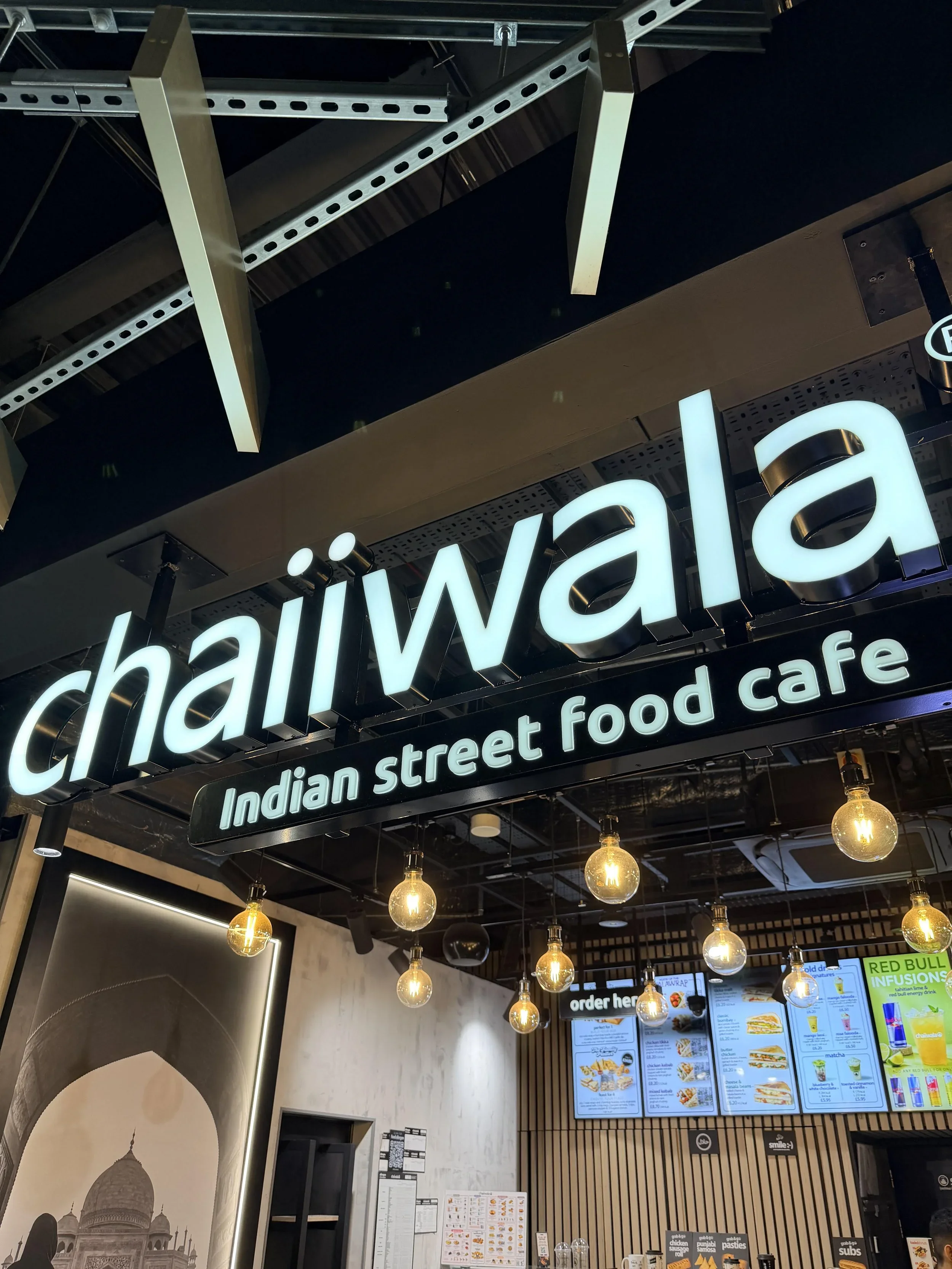
THE QUICK FIX — Chaiiwala (UK high streets, plus Canada and the UAE)
What to order: The karak chaii is the whole point — order it first and order it strong. From there, the menu fans out: pink chaii and caramel chaii for the sweet-toothed, masala chaii for depth, a vegan version that holds up better than it should. Pair with masala chips (the gateway drug), a Karachi bun kebab, or the full desi breakfast. Going as a group? The six-cup flask is built for exactly that.
Pricing guidance: Easygoing high-street pricing — a cup runs cheaper than a fashionable flat white, and a chai-plus-snack stop stays firmly in everyday-treat territory rather than splurge. A full breakfast spread nudges up but never into special-occasion money.
Who it's best for: Homesick students who need a late cup that tastes like home; weekend family breakfast runs; groups and after-work meet-ups; anyone near one of the 24-hour drive-thrus chasing chai at an unreasonable hour. Less a quiet laptop café — this is a place that hums.
How it compares: Beats any generic coffee chain at its own game — for a desi craving on a grey high street, nothing in that lane comes close. Its closest spiritual rival is FiLLi, the Dubai-born chain now on Houston's Hillcroft: where Chaiiwala leads with a seven-spice karak, FiLLi leads with saffron, and which one wins comes down to whether you want spice or perfume in the cup. But neither chain is built for surprise — the karak is engineered for consistency, so it can't replicate a fresh dhaba pour on the GT Road or the terracotta-and-smash ritual of a Kolkata bhaar. A great independent chaiwala will still edge it on character and ceremony; Chaiiwala wins, decisively, on being there — open, reliable, and around the corner — which on most days is the thing you actually needed.