
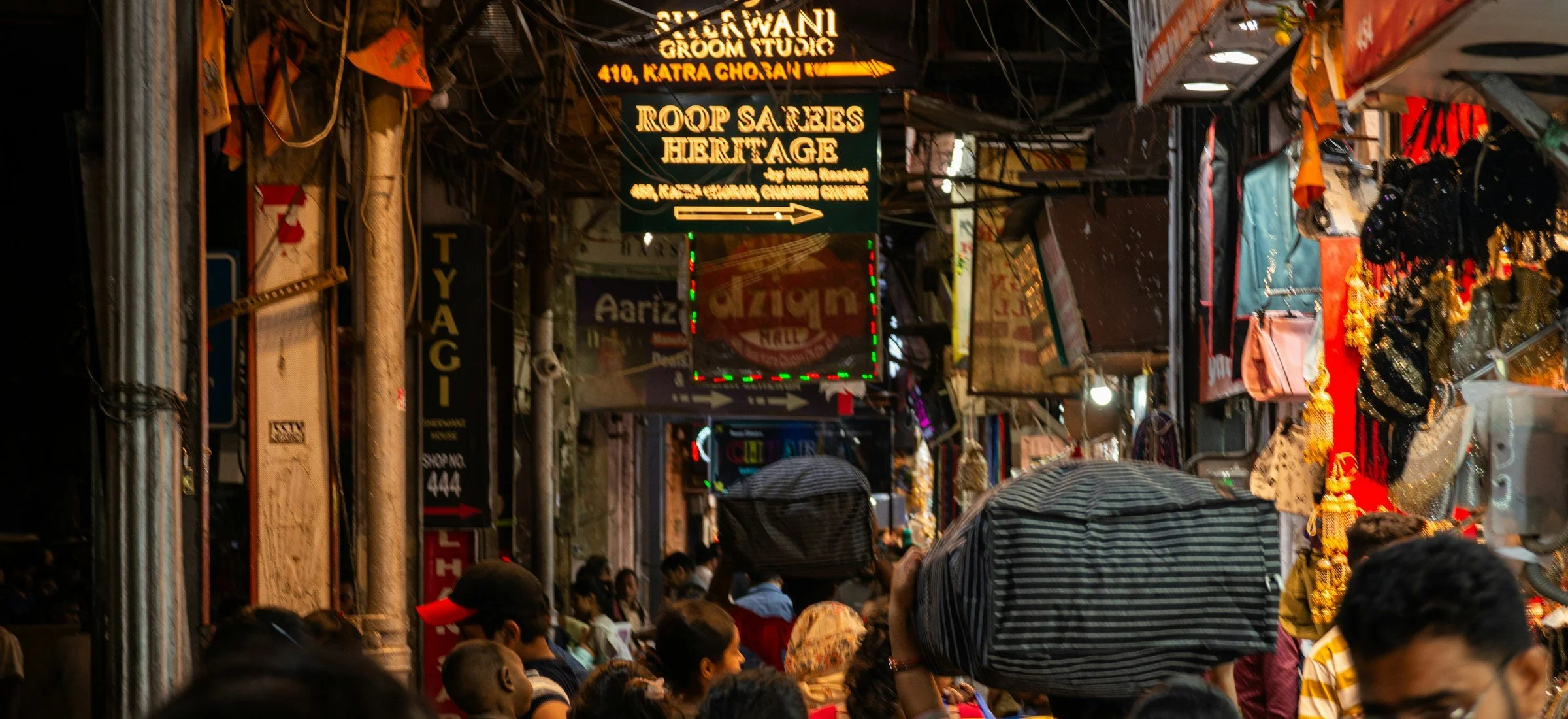
Photo by Zoshua Colah on Unsplash
Every dish you'd defend as "the real thing" started life as somebody's experiment. It's time to retire the word.
By the Desi Food Fix Editorial Team
Picture a wedding buffet in Sugar Land, Texas. Somewhere between the chafing dishes and the gulab jamun tower, an uncle in a crisp kurta fishes a golden potato out of the biryani with a serving spoon and holds it up like evidence at a trial. "This," he announces to nobody in particular, "is not authentic." Half the table nods gravely. The other half, quietly Bengali, keeps eating.
We have all sat at that table. Authentic is the word that ends dinner arguments, sells tikka on laminated menus and turns up in a thousand restaurant reviews a day. "Real biryani doesn't have potatoes." "That's not how my nani made it." "You can't get proper pad thai outside Bangkok." It sounds like a standard. Lean on it even slightly and it buckles.
So here's our proposal: let the word retire. It has more than earned the rest.
Every classic was once the new kid
Start with the chili, the one ingredient South Asian cooking would seem least able to live without. It came from the Americas. Before Portuguese ships reached the Indian coast, there was no lal mirch in a Kerala fish curry or a Punjabi achaar; the heat came from black pepper and long pepper. Within a few generations the newcomer had taken over the masala dabba so completely that most of us assume it was always there.
Goa tells the same story with a sharper edge. Its most famous export, vindaloo, takes its name from carne de vinha d'alhos, a Portuguese preparation of pork soaked in wine and garlic. Goan cooks traded the wine for local palm vinegar, poured in the very spices the Portuguese had crossed oceans to find, and turned a sailor's preservation trick into one of the subcontinent's great curries. Colonial import, local genius, five centuries of polishing. Which part, exactly, is the authentic one?
Then there's that potato. Kolkata biryani carries one because Wajid Ali Shah, the deposed Nawab of Awadh, brought his Lucknow kitchen into exile at Metiabruz in the 1850s, and somewhere in those kitchens the potato went into the pot. Historians still bicker over why: thrift, novelty, or a nawab who simply liked it. Nobody bickers about what happened next. Kolkata decided the potato was the best part, and an entire city built its biryani identity around a vegetable the uncle in Sugar Land would happily deport.
Even pad thai, the dish people swear you can only eat properly in Bangkok, is younger than plenty of our grandparents. Thailand's government promoted it as a national dish in the late 1930s and early 1940s, handing out the recipe and noodle carts in the name of national pride. The rice noodles and the wok came from Chinese cooking anyway.
Food has never needed a passport.
The nani clause
In desi households, the final ruling on any dish belongs to a grandmother. Nani's recipe. Dadi's hands. Whatever she made is the benchmark, and there is no court of appeal.
We adore her too. But she was improvising the whole time. She learned from her mother, cooked with whatever the bazaar in her town carried that decade, dialed back the chilies for one son-in-law and doubled the ghee for another. Ask her, and she'll probably tell you her own mother-in-law did it all wrong.
Her version is a snapshot of one kitchen in one era, not a law carved in stone. Freezing that snapshot and calling it the only true version isn't respect. It's taxidermy: the shape is perfect, and nothing inside is breathing.
Who's really holding the rulebook
People reach for "authentic" for three very different reasons, and it helps to tell them apart.
The first is longing, and it deserves gentleness. When the city you grew up in is half a world away, a bowl of haleem that tastes like Ramzan nights in Hyderabad is not a small thing. But the version you're chasing is usually the one your family left with, frozen in the year of departure. Hyderabad kept cooking after you left. Today's haleem there might not match your memory either.
The second is marketing. "Authentic" on a strip-mall awning is shorthand for trust: someone in this kitchen knows what they're doing. Sometimes that's true. Often the more honest sign would read "Food from Lahore, adjusted for Katy, and genuinely great."
The third is gatekeeping, and this one gets less patience from us. It's the move that says your version doesn't count because of where you were born, who taught you or what you swapped in. A second-generation cook in Edison who folds methi into a lasagna isn't diluting two cuisines. She's starting a third.
What great cooking actually looks like
None of this means anything goes. Technique is real. Bloom whole spices in fat before the liquid goes in and a korma sings; skip that step and it sulks. Ratios matter. Dum is a discipline, not a vibe. Tradition is centuries of cooks working out what works, and it deserves to be studied.
But the cooks we remember learned the rules well enough to break one on purpose. In 1947, Kundan Lal Gujral and his partners fled Peshawar during Partition and opened Moti Mahal in Delhi's Daryaganj. The tandoori chicken they carried across the new border, and the butter chicken and dal makhani that came out of that kitchen soon after, now define "Punjabi food" for half the planet. They are younger than some of the uncles ordering them.
In 2008, Roy Choi rolled a truck onto the streets of Los Angeles selling Korean short rib in Mexican corn tortillas. Purists winced. The city lined up around the block, and the Korean taco became as much a part of LA as the traffic.
Neither story was a betrayal. Both were tradition doing what it has always done: moving.
A better question
So instead of asking whether a dish is authentic, try this: Is it good? Does it know where it came from? Would you go back for it on a random Tuesday?
Picture a karahi house in a Houston strip mall, run by a chef who grew up eating in Lahore and has spent fifteen years adjusting the heat, the tomato and the ginger for his regulars. That karahi isn't a copy of Lahore and never pretended to be. It's the dish's next chapter, written in a parking lot off the freeway.
Food doesn't need a glass case and a placard. It needs to be cooked, argued over, tweaked and handed on, always a little imperfectly, always carrying a bit of whoever made it.
That isn't the end of tradition. That is tradition.
So let the uncle in Sugar Land keep his spoon raised. We'll be at the other end of the table, potato and all.
The food was always this good. We're just paying attention.